
Fresh-ground masala and stone-ground wheat flour never really went out of fashion in South India — and they are now strongly back. Consumers in tier-2 towns, apartment complexes and restaurant kitchens are actively seeking freshly-ground, chemical-free powders. If you are close to that demand, there is a straightforward business here.
This guide covers the practical side: what drives the demand, which machine to start with, what the setup actually costs, and how to price your service.
1. Why Spice Grinding Works as a Business in South India
Three factors make spice grinding resilient in South India specifically:
- Cooking culture: South Indian cuisine uses fresh-ground spice bases — sambar powder, rasam powder, biryani masala, coriander powder — that have different flavour profiles when freshly ground vs. packaged. This demand is not seasonal.
- Hotel & restaurant demand: Small hotels (known locally as "mess" or "meals" restaurants) and caterers prefer to grind their own masalas in bulk. They pay well and order regularly — one good hotel contract can keep a small mill busy.
- Home customers: Urban households bringing 1–2 kg for monthly grinding are the backbone of a neighbourhood mill's recurring business.
The grinding service model is particularly resilient — you are not buying and selling commodity; you are charging for a service on the customer's own raw material. That keeps your capital requirement low and risk minimal.
2. The Business Models
Job-Work Grinding (Most Common)
Customers bring whole spices or grains; you grind and return the powder. Charge per kg. No inventory risk. Most neighbourhood flour mills and spice grinders run this model.
Ready-to-Buy Powder (Higher Margin)
You source bulk spices, grind, package under your label, and sell pre-packed. Requires FSSAI licensing and more upfront capital. Typical customers: retail stores, hotels buying in volume, online.
Combination
Run job-work to pay the bills, sell branded powders when you have leftover grinding capacity. The most common scale-up path.
3. Licensing
Spice grinding for job-work follows the same FSSAI rules as oil pressing:
- Under ₹12 lakh/year: Basic FSSAI Registration (₹100/year) from foscos.fssai.gov.in. Spice processing falls under "Spices & Condiments" category.
- Branded packaged spices: State FSSAI License required. Apply well in advance — 60–90 day processing time.
- Udyam Registration: Free, mandatory for MSME benefits. Do this early.
- Trade Licence: From local municipality. ₹500–₹2,000/year depending on area.
4. Machine Selection — SP400 to SP4500
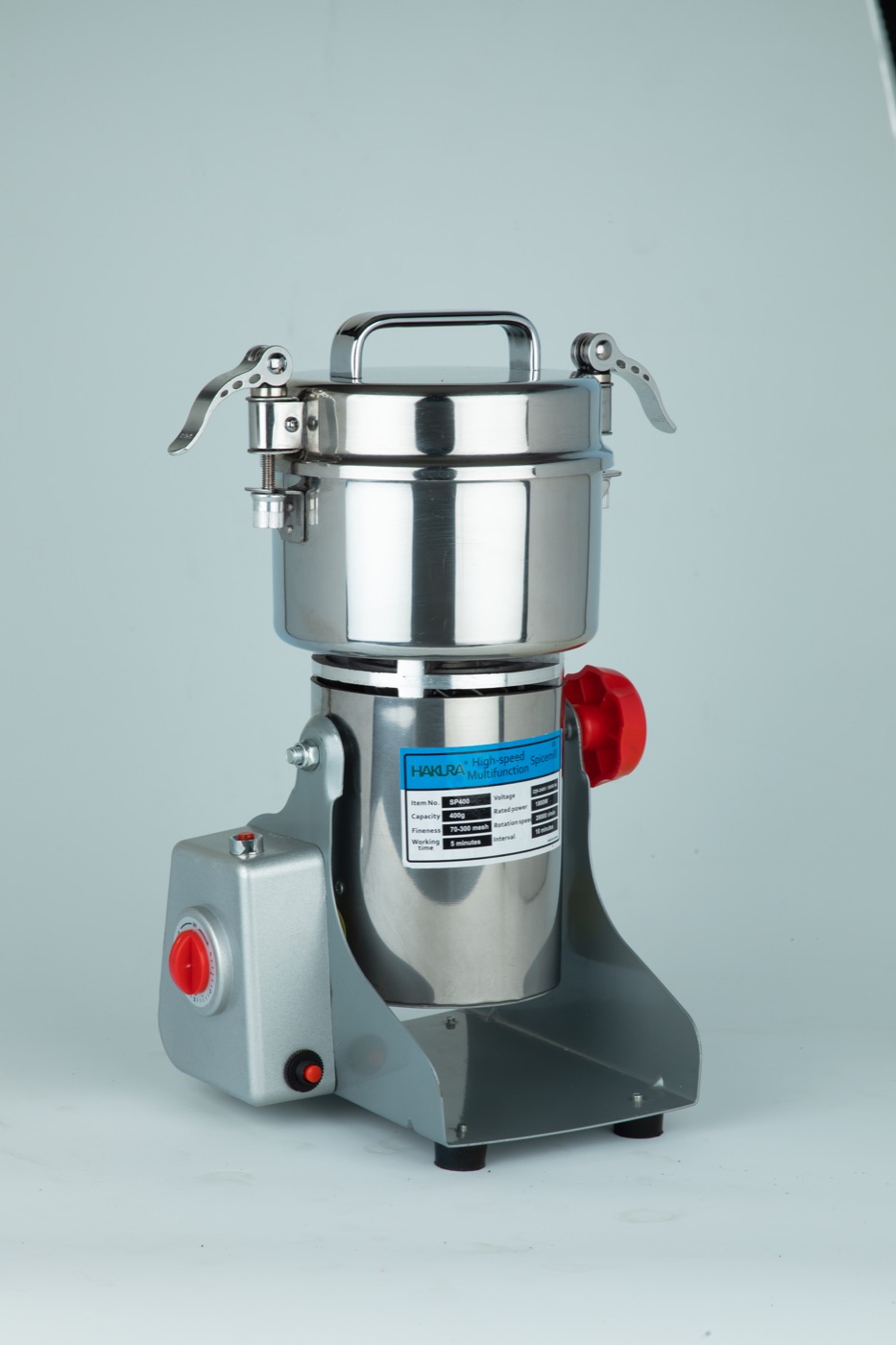
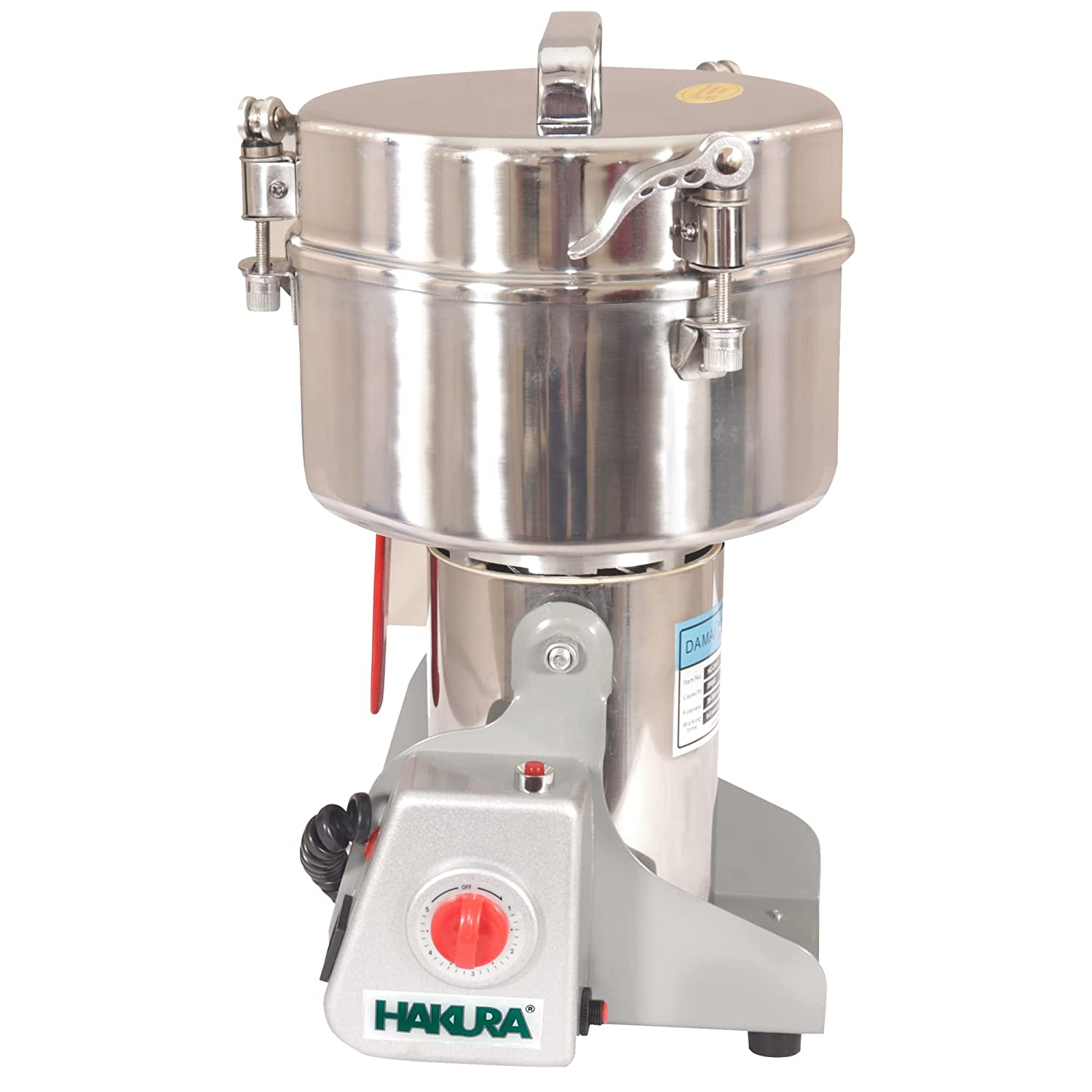
Hakura's spice mill range is designed for different daily grinding capacities. Match the machine to your realistic first-year demand, not your ambition.
| Machine | Capacity | Best Use Case | Power |
|---|---|---|---|
| SP400 | ~5 kg/hr | Home-based, very small neighbourhood demand | 230V household |
| SP1000 | ~10–12 kg/hr | Dedicated shop, 3–5 hotel clients | 230V household |
| SP2000 | ~18–20 kg/hr | Busy shop, small wholesale | 230V household |
| SP3000 | ~25–30 kg/hr | Commercial mill with restaurant supply | 3-phase |
| SP4500 | ~40–45 kg/hr | Wholesale / bulk production | 3-phase |
| Pulveriser | ~15–20 kg/hr (ultra-fine) | Masalas, medicinal powders, fine turmeric | 3-phase |
Key question to answer before buying: Do you have 3-phase power at your shop? SP3000, SP4500 and the Pulveriser require 3-phase. Most residential and small commercial spaces are single-phase. Check with your electricity board before ordering.
For most first-time operators, SP1000 is the sweet spot — 10–12 kg/hr is sufficient for 15–25 daily customers, runs on household power, and the investment is manageable. The SP2000 is the right move if you already have hotel contacts lined up.
See the full Hakura spice mill range →
5. Setup Costs
Realistic budget for a small spice grinding shop (SP1000, rented space in a market area):
| Item | Approx. Cost |
|---|---|
| Hakura SP1000 spice mill | ₹45,000–₹55,000 |
| Shop deposit + 2 months rent (small town market) | ₹20,000–₹40,000 |
| Basic shelving, counter, bags | ₹5,000–₹8,000 |
| FSSAI registration | ₹100 |
| Trade licence | ₹500–₹1,000 |
| Signboard | ₹2,000–₹5,000 |
| Miscellaneous | ₹3,000 |
| Total | ₹75,000–₹1,12,000 |
If running from home with the SP400 or SP1000, eliminate shop rent and deposit — investment drops to ₹50,000–₹65,000.
Government Boost
The Government Can Fund Up to 35% of Your Setup Cost
- PMFME Scheme — 35% credit-linked subsidy up to ₹10 lakh on your machine (Ministry of Food Processing Industries)
- Mudra Loan (PMMY) — Collateral-free bank loan up to ₹10 lakh. No guarantor needed. Available at any PSB or RRB.
- State schemes — Tamil Nadu: 25% capital subsidy on machinery via local DIC. Kerala: dedicated portal at pmfmekerala.org
- Udyam Registration — Free MSME registration at udyamregistration.gov.in — unlocks all of the above
6. Pricing Your Service
Pricing varies significantly by location, machine capability, and what you grind. Here are current market-rate ranges for Tamil Nadu and Kerala (2025):
| Product | Typical Charge (per kg) | Notes |
|---|---|---|
| Chilli powder | ₹30–₹50 | High volume, competitive |
| Coriander powder | ₹25–₹40 | Common household request |
| Turmeric powder | ₹35–₹55 | Hard on the machine; charge premium |
| Sambar / rasam powder (mixed) | ₹50–₹80 | Customer brings pre-mixed whole spices |
| Wheat flour (atta) | ₹8–₹15 | Low margin; volume play |
| Ragi / millets | ₹15–₹25 | Growing demand |
| Dry coconut (copra) powder | ₹40–₹60 | Specialty item |
Price based on the complexity and residue-cleaning time. Turmeric and dry coconut leave significant residue that requires machine cleaning between batches — factor this in. Hotels and bulk customers often negotiate lower rates for consistent volume; give a 10–15% discount for orders above 20 kg/day.
7. The Atta / Grain Side of the Business
Atta (wheat flour) grinding is lower margin per kg but drives volume that keeps your machine running. The key is fresh grinding — commercially milled atta loses flavour and some nutrition within weeks; freshly ground atta is noticeably better. Customers who switch to fresh-ground atta are extremely loyal.
Millets (ragi, jowar, bajra, foxtail millet) are the growth opportunity in South India right now — health-conscious consumers are actively looking for freshly ground millet flour. If you are near an urban or semi-urban pocket, millet grinding can command ₹20–₹30/kg and generate strong word-of-mouth.
8. Finding Your First Customers
Hotels and "Mess" Restaurants
Walk in person to 15–20 small hotels within 3 km of your shop. Offer to grind a sample batch for free. If they like the quality, most will become regulars. A single hotel grinding 5–10 kg/day is meaningful recurring business. Build relationships with the head cook, not just the owner.
Apartment Complexes
WhatsApp groups for apartment buildings are highly effective in South Indian cities. A post with a short video of fresh spice coming out of the machine gets shared widely. Offer home delivery for orders above ₹200.
Weekly Markets
In smaller towns, setting up at the weekly market (even briefly) builds awareness quickly. Freshly ground spice has a visible and smell-able advantage over packaged.
Catering & Event Orders
Festival seasons (Diwali, Pongal, weddings) generate large one-time orders for sambar powder, biryani masala, and snack mixes. If you have capacity, these can be very lucrative. Market directly to caterers and marriage hall managers.
9. Payback Period — A Simple Model
SP1000, small town, operating 6 hours/day:
- Average grinding rate: 8 kg/hr (accounting for changeovers)
- Daily grinding: 48 kg
- Average charge: ₹35/kg (blended across spice types)
- Daily revenue: ₹1,680
- Power cost: ~₹80/day
- Daily profit: ~₹1,600
- Monthly (26 working days): ~₹41,600
At this rate, machine cost pays back in 5–6 weeks. Shop rent and setup costs recover in 2–3 months. This is a conservative model — a busy shop in a town market area will move significantly more.
Note: The biggest variable is how fast you build hotel and restaurant relationships. Day-1 walk-ins are low; month-3 hotel clients change the economics completely. Plan your cash runway for the first 60–90 days while the customer base builds.
10. First Steps This Week
- Visit 5 small hotels near you and ask if they grind their own masalas or buy packaged. Listen carefully.
- Check power supply at your intended shop location — single-phase or three-phase.
- Register at udyamregistration.gov.in for Udyam MSME status (free, 10 minutes).
- Get pricing on the SP1000 or SP2000 from Hakura — ask about the demo grinding options.
- Talk to at least 10 households in your building or neighbourhood to gauge interest in fresh grinding.
See the Hakura Spice Mill range
From SP400 for home-based grinding to SP4500 for commercial bulk production — there's a machine for every scale.